Rebar Reinforcement & Concrete Control Joint Installation in Waldorf, MD
Reinforcement and jointing are what separate a concrete surface that lasts from one that cracks and fails, and Waldorf Concrete installs rebar reinforcement and control joints for concrete projects throughout Waldorf, Maryland. Proper steel placement and joint layout reduce random cracking and help slabs perform under load, extending the service life of your concrete. To request an estimate, call 240-245-2853 or complete the form on this page.
240-245-2853Service Overview
Rebar Reinforcement & Concrete Control Joint Installation Waldorf in Waldorf, MD
Concrete is strong in compression but weak in tension, which is why reinforcement and joints matter. Rebar and other reinforcement help the slab resist tensile stresses and carry loads, while control joints create planned locations for the cracking that naturally occurs as concrete cures, shrinks, and moves with temperature. We design reinforcement and joint layouts to suit each slab's size and use.
Reinforcement does not guarantee that concrete will never crack, and control joints do not eliminate cracking — they help manage where it occurs. Reinforcement and joint requirements vary by project, and structural specifications should follow project plans and applicable requirements. We do not present structural-engineering calculations.
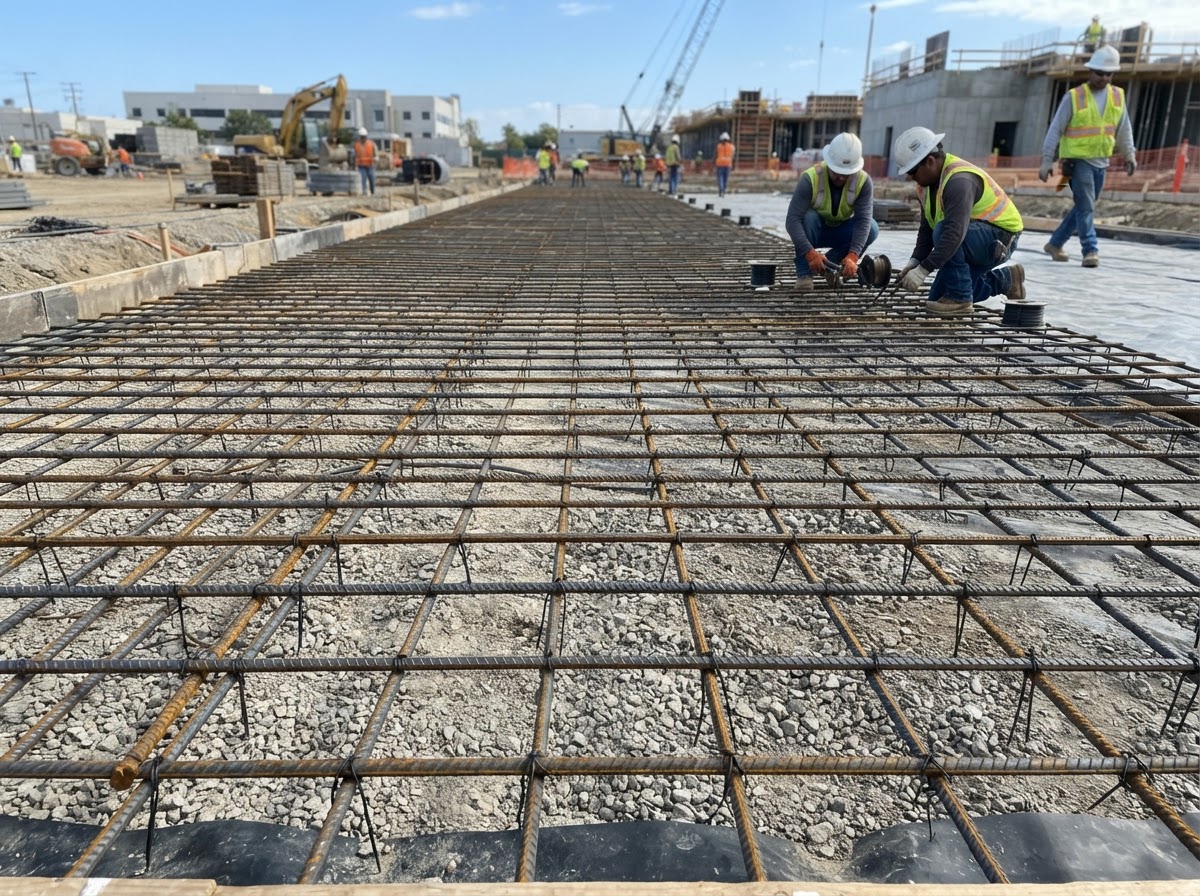
Rebar reinforcement and control joint installation in Waldorf, MD supports driveways, slabs, foundations, and commercial flatwork. Reinforcement — rebar, wire mesh, or fiber — is placed at the correct height within the slab so it can do its job, and control joints are planned at appropriate spacing and depth to manage shrinkage cracking.
Joint layout is as important as reinforcement. Control joints create planned weak points so normal shrinkage and temperature cracking occurs along straight, controlled lines rather than randomly across the surface. We plan joint location, depth, and timing to suit the slab's dimensions and conditions.
Driveway Reinforcement
Rebar or mesh in driveways to help manage cracking under vehicle loads.
Slab Reinforcement
Reinforcement for garage, shed, and pole barn slabs sized to the structure's loads.
Foundation Reinforcement
Rebar in footings and foundation walls to handle tensile stresses and structural loads.
Control Joint Layout
Planned joint placement on slabs and walkways to manage shrinkage cracking along straight lines.
Project Considerations
Options, Materials and Considerations for Rebar Reinforcement & Control Joints
Final project requirements depend on site conditions, intended use, design, and applicable requirements. We tailor each project rather than applying one standard.
Reinforcement Selection
We choose rebar size and spacing, wire mesh, or fiber based on the project's requirements. More rebar is not always better — the right size and type for the load matters.
Placement Height
Reinforcement only works if it is placed at the correct height within the slab. We support and check placement during the pour so it stays correctly positioned.
Joint Layout
Control and expansion joints are planned at appropriate spacing and depth for the slab's dimensions to manage cracking effectively.
Joint Type
Control joints manage shrinkage cracking; isolation joints separate the slab from other structures; expansion joints accommodate movement. We use the right type for each location.
How It Works
The Rebar Reinforcement & Control Joints Process
A clear, step-by-step approach from first conversation to final walkthrough. We do not promise a specific schedule before evaluating your project.
- 1
Load Assessment
We review the slab's size, thickness, and intended loads to determine appropriate reinforcement.
- 2
Reinforcement Selection
We choose rebar size and spacing, wire mesh, or fiber based on the project's requirements.
- 3
Placement
Rebar is placed and tied at the correct height and spacing so it sits within the slab where it can do its job.
- 4
Joint Planning
Control and expansion joints are planned at appropriate spacing and depth for the slab's dimensions.
- 5
Pour Coordination
Reinforcement is checked and supported during the pour so it stays correctly positioned.
- 6
Joint Installation
Joints are tooled or saw-cut at the right time and depth to be effective.
Problems We Address
Common Problems and Benefits of Rebar Reinforcement & Control Joints
Signs that rebar reinforcement & control joints may be needed, and the practical benefits of doing the work right.
Random Cracking
Without proper joints, concrete cracks randomly. Control joints create planned crack locations so cracking occurs along controlled lines.
Misplaced Reinforcement
Rebar pushed to the bottom of the slab during the pour does nothing. We support and check placement so reinforcement stays at the correct height.
Joint Timing
Control joints cut too early damage the surface; cut too late and the concrete has already cracked. We time jointing to the conditions.
Joint Deterioration
Failed joints let water in and accelerate damage. We repair deteriorated joints to restore function and slow further deterioration.
Why Property Owners Choose Waldorf Concrete
- Reinforcement matched to the slab's size and loads
- Rebar placed at the correct height within the slab
- Control joints planned to manage cracking along straight lines
- Joint timing and depth suited to conditions
- Honest guidance — reinforcement does not eliminate cracking
Related Concrete Services
Serving Waldorf and Nearby Communities
Service availability may extend to these nearby areas. Contact Waldorf Concrete to confirm availability at your exact address.
Frequently Asked Questions
Questions About Rebar Reinforcement & Control Joints in Waldorf, Maryland?
Do concrete slabs require rebar in Waldorf?
Reinforcement depends on the slab's size, thickness, and loads. Many slabs benefit from rebar, wire mesh, or fiber reinforcement, and we recommend the appropriate option for each project.
Why are control joints installed in concrete?
Control joints create planned weak points so normal shrinkage and temperature cracking occurs along straight, controlled lines rather than randomly across the surface.
How deep should control joints be?
Control joints are typically cut to a fraction of the slab's thickness to be effective. We follow proven depth and spacing guidelines for the slab's dimensions.
When should control joints be cut?
Joints should be cut as soon as the concrete can support the saw or tool without raveling the surface, but before it shrinks enough to crack on its own. Timing depends on conditions.
Does rebar keep concrete from cracking?
No. Reinforcement does not guarantee that concrete will never crack. It helps the slab resist tensile stresses and hold together if cracking does occur, but proper joints are still needed to manage cracking.
What is the difference between control and expansion joints?
Control joints manage shrinkage cracking within a slab; isolation joints separate the slab from other structures like walls or columns; expansion joints accommodate movement. We use the right type for each location.
Can you repair deteriorated concrete joints?
Yes. We clean, re-seal, or rebuild failed joints to restore function and slow further deterioration of the surrounding concrete.
Which areas near Waldorf do you serve for rebar and joint installation?
We serve Waldorf and surrounding communities including Upper Marlboro, Bowie, Brandywine, and White Plains. Contact us to confirm availability at your address.
Start Your Rebar Reinforcement & Control Joints Project With Waldorf Concrete
Ready to move forward? Call for a free estimate or complete the form and our team will follow up to discuss your rebar reinforcement & control joints project in Waldorf and surrounding areas.